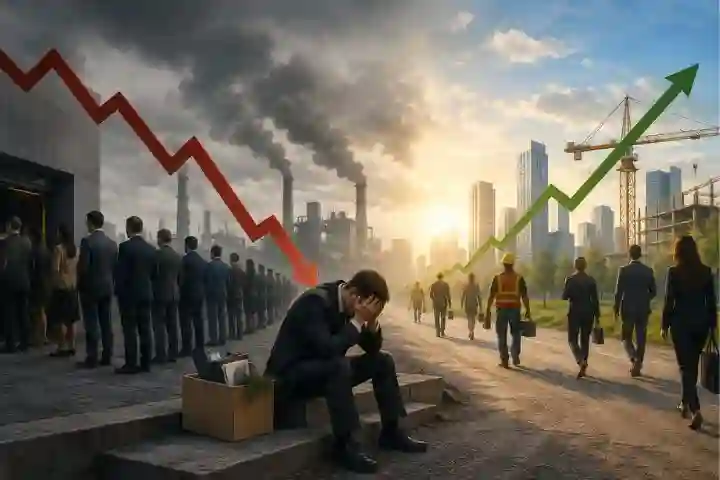

Unemployment is one of the biggest economic challenges that impacts individuals, businesses, and countries. However, unemployment does not always happen for the same reason. Some people become unemployed while changing careers, some lose jobs because industries evolve, and others face job loss due to economic downturns. One major type of unemployment that economists closely study is cyclical unemployment.
Cyclical unemployment occurs when people lose jobs because of fluctuations in the economy. It is closely linked to the business cycle, meaning it rises during economic recessions and falls during periods of economic recovery. When businesses face reduced demand for products and services, they often lower production and reduce their workforce to cut costs. Once the economy improves, businesses begin hiring again, reducing unemployment levels.
This type of unemployment is important because it reflects the overall health of the economy. A rise in cyclical unemployment often indicates that the economy is slowing down, while a decline suggests economic improvement.
What Is Cyclical Unemployment?
Cyclical unemployment refers to unemployment that occurs due to economic downturns or fluctuations in the business cycle. It happens when demand for goods and services decreases, causing companies to reduce production and lay off workers.
In simple terms, cyclical unemployment is job loss caused by weak economic conditions rather than a worker’s lack of skills or qualifications.
For example, during a strong economy, companies often experience increased demand for their products and hire more workers. However, if the economy enters a recession and consumer spending decreases, those same businesses may cut jobs because they no longer need as many employees.
Unlike permanent unemployment, cyclical unemployment is generally temporary. Once economic conditions improve, businesses start growing again and employment opportunities return.
Understanding the Business Cycle and Its Relationship With Cyclical Unemployment
To understand cyclical unemployment properly, it is necessary to understand the business cycle. The business cycle refers to the natural rise and fall of economic activity over time.
The economy typically moves through four major phases, and cyclical unemployment changes during each phase.
Economic Expansion
During an expansion phase, economic activity increases. Businesses grow, profits rise, and consumers spend more money on goods and services.
As demand rises, companies increase production and hire more employees to meet customer needs. During this period, cyclical unemployment is usually very low because businesses actively seek workers.
For instance, during a period of rapid technological growth, software companies may expand operations and hire thousands of employees.
Economic Peak
The peak phase represents the highest point of economic growth. Businesses operate efficiently, production levels remain high, and employment rates are generally strong.
At this stage, unemployment remains low because companies continue to benefit from strong demand and stable profits.
However, economic growth cannot continue forever. Eventually, slowdowns begin to appear.
Economic Recession
The recession phase is when cyclical unemployment becomes most noticeable. Economic activity slows, consumer confidence drops, and spending decreases.
Since businesses earn less revenue during a recession, they often reduce operating expenses. One of the most common ways companies cut costs is by reducing staff or stopping recruitment.
Industries like manufacturing, retail, tourism, hospitality, and construction are especially vulnerable during recessions because demand for their services tends to fall significantly.
Economic Recovery
Recovery begins when the economy starts improving again. Consumer confidence increases, spending rises, and businesses begin investing in growth.
As demand improves, companies restart hiring and bring back workers. Gradually, cyclical unemployment decreases and economic activity strengthens.
Major Causes of Cyclical Unemployment
Cyclical unemployment does not happen randomly. Several economic factors contribute to its rise.
Decline in Consumer Spending
One of the main causes of cyclical unemployment is reduced consumer spending.
When people become financially uncertain, they often reduce expenses and avoid unnecessary purchases. Businesses experience lower sales as a result.
For example, if consumers stop spending on luxury products, electronics, or travel, companies in these industries may struggle financially and reduce staff.
Lower spending creates a chain reaction throughout the economy because businesses generate less revenue and may no longer afford large workforces.
Economic Recession
Recessions are one of the biggest causes of cyclical unemployment.
During a recession, economic growth slows or becomes negative. Businesses experience reduced profits, investment decreases, and hiring slows significantly.
Companies may freeze recruitment, reduce employee hours, or lay off workers completely.
The severity of cyclical unemployment often depends on how long the recession lasts. A short recession may create temporary job losses, while a long recession can result in widespread unemployment.
Financial Crises
Financial crises can also trigger cyclical unemployment.
Events such as banking collapses, stock market crashes, or debt crises create uncertainty in the economy. Businesses become cautious and reduce operations to survive financially.
When companies struggle to secure investments or loans, they often reduce spending and workforce size.
This creates widespread job losses across multiple industries.
Reduced Business Investment
Businesses tend to reduce investment during uncertain economic conditions.
Companies may delay expansion projects, stop purchasing equipment, or postpone opening new branches.
Without investment, fewer employment opportunities are created, increasing unemployment levels.
This often affects sectors such as construction, manufacturing, and corporate services.
Falling Industrial Production
Manufacturing industries are highly sensitive to economic changes.
When customer demand decreases, factories produce fewer goods. Lower production means companies require fewer workers.
As a result, layoffs become common in industries like automobiles, textiles, electronics, and heavy manufacturing.
Key Characteristics of Cyclical Unemployment
Cyclical unemployment has unique characteristics that make it different from other forms of unemployment.
Closely Linked to Economic Conditions
The biggest characteristic of cyclical unemployment is that it depends entirely on the economy.
When economic growth slows, unemployment rises. When the economy improves, employment opportunities increase again.
This direct relationship with economic performance makes cyclical unemployment easier to identify.
Usually Temporary
In most situations, cyclical unemployment is temporary.
Workers may lose jobs during a recession but regain employment once businesses recover.
However, if economic problems continue for a long time, temporary unemployment may become more serious and difficult to reverse.
Impacts Multiple Industries
Cyclical unemployment often affects several sectors at the same time.
Because reduced consumer spending affects many businesses, industries such as retail, hospitality, transportation, construction, and manufacturing may all experience job losses simultaneously.
Can Spread Rapidly
Economic slowdowns often create a domino effect.
For example, if construction projects stop, builders lose jobs. Suppliers of building materials may also face losses, and transportation companies delivering materials may see lower demand.
This interconnected effect causes unemployment to spread quickly across the economy.
Real-Life Examples of Cyclical Unemployment
Looking at real-world examples makes cyclical unemployment easier to understand.
The Global Financial Crisis of 2008
One of the most significant examples of cyclical unemployment occurred during the global financial crisis.
Financial institutions faced major problems, housing markets collapsed, and businesses struggled to survive.
As economic activity declined, millions of workers lost jobs in industries such as finance, construction, manufacturing, and retail.
Many businesses reduced staff because customers stopped spending and investments slowed dramatically.
The COVID-19 Economic Slowdown
The pandemic created another major example of cyclical unemployment.
Lockdowns and travel restrictions caused many businesses to temporarily close or reduce operations.
Industries such as tourism, hotels, restaurants, airlines, and entertainment suffered massive job losses due to reduced demand.
Many workers faced unemployment until economic activity gradually recovered.
Automobile Industry Slowdowns
Car sales often decline during economic uncertainty because consumers avoid major purchases.
When fewer people buy vehicles, automobile companies reduce production and lay off workers.
This demonstrates how cyclical unemployment directly depends on changing economic demand.
Effects of Cyclical Unemployment
Cyclical unemployment creates major economic and social consequences.
Lower Household Income
Job loss directly reduces family income.
Many households struggle to pay for rent, food, education, healthcare, and daily expenses after losing employment.
Financial instability may also force families to reduce spending significantly.
Reduced Consumer Spending
Unemployed workers naturally spend less money.
Lower spending reduces demand for products and services, which may create additional job losses.
This creates a negative cycle where unemployment continues affecting economic growth.
Increased Government Spending
Governments often increase spending during periods of high unemployment.
Financial support programs, unemployment benefits, and economic recovery initiatives require significant public funding.
This can increase government debt and budget pressure.
Business Losses
Businesses also suffer during cyclical unemployment.
Lower consumer demand often reduces profits, making it harder for companies to survive.
Small businesses are especially vulnerable because they may have fewer financial reserves.
Mental and Emotional Stress
Unemployment affects emotional well-being.
Many unemployed workers experience stress, anxiety, depression, and uncertainty about the future.
Long-term unemployment may also reduce confidence and motivation.
Cyclical Unemployment vs Other Types of Unemployment
Understanding the difference between cyclical unemployment and other unemployment types helps avoid confusion.
Cyclical Unemployment vs Structural Unemployment
Structural unemployment occurs when workers lack the skills required for available jobs.
For example, automation replacing factory workers may create structural unemployment.
Cyclical unemployment, however, happens because the economy weakens and businesses reduce hiring.
Cyclical Unemployment vs Frictional Unemployment
Frictional unemployment occurs when people are temporarily searching for jobs or transitioning between careers.
For example, someone leaving one company to find better opportunities experiences frictional unemployment.
Cyclical unemployment happens due to weak economic conditions rather than personal career changes.
Cyclical Unemployment vs Seasonal Unemployment
Seasonal unemployment happens during certain times of the year.
Agricultural workers or tourism employees may only work during specific seasons.
Cyclical unemployment is different because it depends on economic growth rather than seasonal demand.
How Governments Reduce Cyclical Unemployment
Governments often take steps to reduce cyclical unemployment during recessions.
Increasing Public Spending
Governments may invest in infrastructure, healthcare, education, and public services.
These projects create jobs and stimulate economic growth.
Lowering Interest Rates
Central banks may reduce interest rates to encourage borrowing and spending.
Businesses may invest more, and consumers may spend more money.
This helps economic recovery and creates employment opportunities.
Business Support Programs
Financial support programs help struggling businesses survive during difficult periods.
Loans, grants, and subsidies may help companies avoid layoffs.
Workforce Training Programs
Governments may introduce training programs to help workers improve skills and remain employable during economic changes.
This can improve job opportunities during recovery periods.
Why Cyclical Unemployment Matters
Cyclical unemployment is important because it serves as an indicator of economic health.
A rise in cyclical unemployment often signals reduced economic growth, weak consumer demand, and financial instability.
Economists, governments, and businesses closely monitor unemployment rates because they affect spending, investment, and economic planning.
Understanding cyclical unemployment helps policymakers take faster action during economic downturns.
Conclusion
Cyclical unemployment is a form of unemployment caused by fluctuations in the economy and changes in the business cycle. It increases during recessions when businesses face lower demand and decreases during economic recovery when companies begin hiring again.
Factors such as reduced consumer spending, recessions, financial crises, lower investment, and declining industrial production often contribute to cyclical unemployment.
Although usually temporary, cyclical unemployment can seriously affect workers, businesses, and governments. It reduces income, lowers spending, creates financial pressure, and impacts emotional well-being.
Understanding cyclical unemployment helps individuals better understand economic conditions and allows governments to create effective policies that support employment and economic recovery.
Also read : New Software RCSDASSK